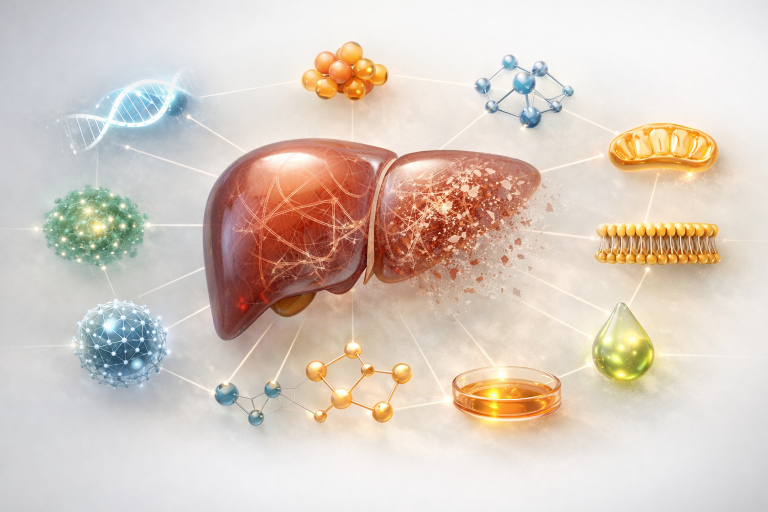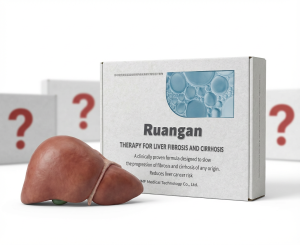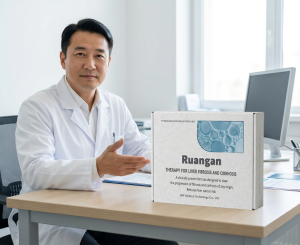

When it comes to traditional Chinese medicine (TCM), many people imagine something mystical and unprovable. However, in the case of Ruangan, we are dealing with a unique example of ‘reverse engineering’: first the ancient formulation showed a clinical effect, and then modern science, using chromatography and molecular analysis, decomposed it into atoms to understand how it works.
This drug was the first TCM product officially approved by the Chinese State Regulator (NMPA) for the treatment of liver fibrosis. The secret of its effectiveness lies in a complex, architecturally verified formula of 11 components. This is not just a ‘mixture of herbs’, but a well-coordinated orchestra, where each ingredient plays its own part in the process of liver remodeling.
In this article, we will take a closer look at the Magnificent Eleven: what is included in the composition, what each component is responsible for, and how their synergy stops the deadly scarring process.
1. Carapax Trionycis (Pancir’ Cherepakhi / Biejia) — ‘Emperor’ of the formula
The main component that gave the drug its name (Biejia) is the shell of a Chinese soft — bodied turtle (Trionyx sinensis). In the recipe hierarchy, he takes the place of the ‘Emperor’ (Monarch drug).
- Traditional view: In TCM, turtle shell is considered the most powerful tool for ‘feeding Yin’ and ‘softening hard knots’. It is he who is responsible for the resorption of seals.
- Modern pharmacology: Laboratory tests revealed a unique set of bioactive polypeptides, polysaccharides and trace elements (zinc, selenium) in the shell extract. Research published in Frontiers in Pharmacologyhas shown that Biejia extract directly inhibits the proliferation of liver stellate cells (HSCs) — the main culprits of fibrosis. It moves them from an active, aggressive state to rest, preventing the production of excess collagen.
2. Radix Paeoniae Rubra (Koren ‘Krasnogo Piona / Chishao) — ‘Minister’ of Blood Circulation
The red peony acts as a ‘Minister’, enhancing the Emperor’s action.
- Mechanism of action: The main active ingredient- peoniflorin. is a powerful antioxidant and anti-inflammatory agent.
- Effect: It improves microcirculation inside the liver lobules. With fibrosis, the vessels are compressed, and the liver suffocates (hypoxia). Peony extract dilates blood vessels, reduces blood viscosity and reduces portal hypertension. In addition, peoniflorin blocks oxidative stress, protecting the membranes of hepatocytes from destruction by free radicals.
3. Radix Astragali (Astragal / Huangqi) — Energy Shield
Astragalus is one of the most famous adaptogens in the world. In the Ruangan formula, it is responsible for immune modulation.
- Key role: Astragaloside IV, isolated from the root, has the ability to reduce the expression of TGF-β1 (transforming growth factor). This is the same signaling protein that commands liver cells to turn into a scar. By blocking this signal, astragalus interrupts the fibrogenesis chain at the very beginning.
- Additional bonus: Increases the total level of albumin in the blood, which is critical for patients with cirrhosis suffering from protein deficiency.
4. Cordyceps Sinensis (Korditseps / Dongchongxiacao) — Protector of mitochondria
The famous parasitic mushroom that grows in the highlands of Tibet. Ruangan uses fermented mycelium powder.
- Action: Cordyceps is the’ fuel ‘ for cells. It stimulates the synthesis of ATP in the mitochondria of hepatocytes, giving the damaged liver energy to regenerate.
- Antifibrotic effect: Studies show that cordyceps polysaccharides inhibit inflammatory cytokines (TNF-α, IL-6), reducing the intensity of inflammation that always precedes fibrosis.
5. Radix Codonopsis (Kodonopsis / Dangshen)
Often referred to as ‘poor man’s ginseng,’ codonopsis nevertheless plays a crucial role in supporting digestion and hematopoiesis.
- Function: Improves the function of the spleen and stomach, which often suffer from liver diseases.
- Biochemistry: Codonopsis saponins improve blood rheology (fluidity) by preventing thrombosis in the portal vein system.
6. Radix Isatidis (Vayda Krasil’naya / Banlangen)
A powerful natural antibiotic and antiviral agent.
- Role: It has a direct antiviral and detoxifying effect. Reduces the load of endotoxins on the liver, preventing secondary inflammation.
7. Rhizoma Curcumae (Kurkuma Tsedoariya / Ezhu)
Not to be confused with the usual culinary turmeric, although they are related.
- Effect: In TCM, this is a tool for ‘breaking blood stasis’. Current evidence confirms: essential oils (curcumol) they promote apoptosis (death) of activated stellate cells, literally causing the fibrous tissue to self-destruct.
8. Radix Notoginseng (Panaks Notozhenshen’ / Sanqi)
An elite component known for its hemostatic and regenerating action.
- Mechanism: Contains unique ginsenosides. Improves hepatic blood flow, but at the same time prevents bleeding, which is vital for patients at risk of esophageal varicose veins.
9. Fructus Forsythiae (Forzitsiya / Lianqiao)
- Action: It has a pronounced anti-inflammatory and antipyretic effect. Helps to ‘cool’ the liver, reducing the activity of lipid peroxidation (LPO).
10. Semen Persicae (Yadro Persika / Taoren)
Another powerful agent for improving hemodynamics.
- Function: Contains amygdalin. In synergy with turmeric and red peony, it actively fights microcirculation disorders, providing oxygen access to the regenerating areas of the liver.
11. Placenta Hominis (Platsenta / Ziheche) — (In modern versions often replaced or excluded in export versions)
Traditionally used as a powerful biostimulator of regeneration. Contains growth factors that stimulate the division of healthy hepatocytes.. : In some modern export batches and versions, the composition can be adapted to the ethical and regulatory standards of importing countries.
The uniqueness of Fufang Bijia Ruangan Pian is not in the presence of a single ‘magic’ ingredient, but in the principle of synergy.
Modern research using Network Pharmacology methods has shown that these 11 components simultaneously affect hundreds of biological targets.
- Attack on the cause: Peony, Forsythia and Vida relieve inflammation and oxidative stress.
- Blocking the mechanism: Astragalus and Biejia block the TGF-β/Smad signaling pathways, preventing cells from building scars.
- Elimination of consequences: Turmeric and Biejia stimulate the production of enzymes (MMP) that ‘ cut ‘ already grown collagen fibers.
- Life Support: Cordyceps and codonopsis give the liver the energy to survive the ‘repair’ process.
It is this comprehensive strategy that allows the drug to demonstrate results that are unattainable for monotherapy: regression of fibrosis and even early cirrhosis, confirmed by biopsy in clinical trials.
Fufang Bijia Ruangan Pian (Ruangan) is a vivid proof that nature has created powerful drugs long before the advent of synthetic chemistry. The task of modern science is only to correctly decipher these formulas and apply them to save lives.
Sources:
Journal of Infectious Diseases (2022)
Frontiers in Pharmacology (2022)
Evidence-Based Complementary and Alternative Medicine