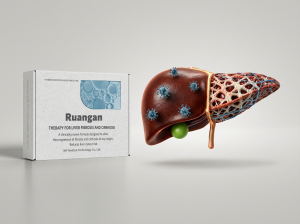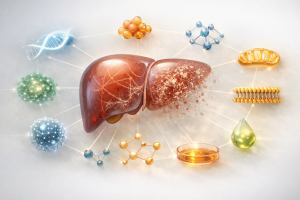

In modern hepatology, the concept of liver fibrosis has undergone a revolutionary change. If earlier fibrosis was perceived as a static ‘scar’, today we know that it is a dynamic process, a battle between the deposition of pathological collagen and its cleavage. As long as this balance is shifted towards accumulation, the disease progresses to cirrhosis. To reverse the process, it is not enough just to remove the provoking factor (virus or toxins) — you need to interfere with the cellular regulation of the liver itself.
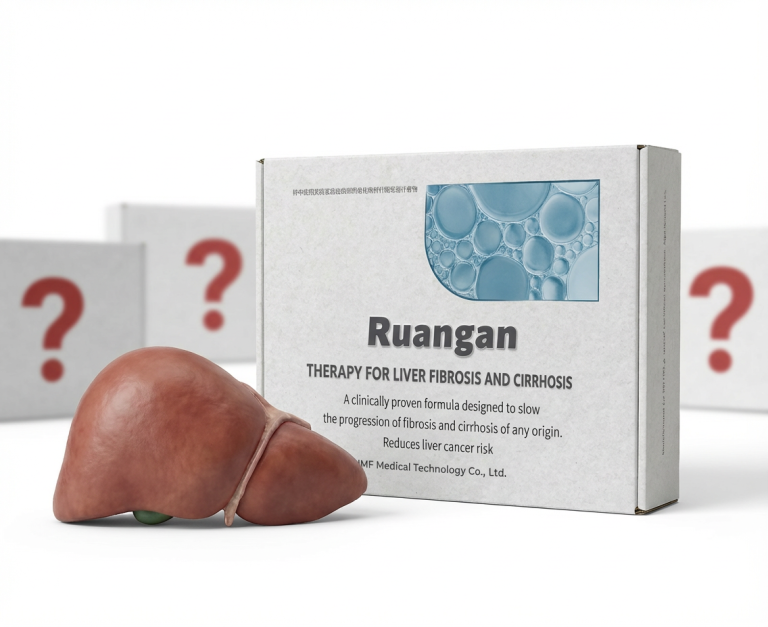
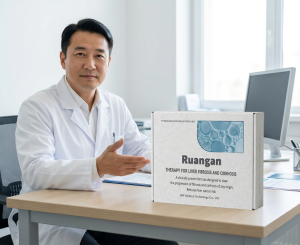
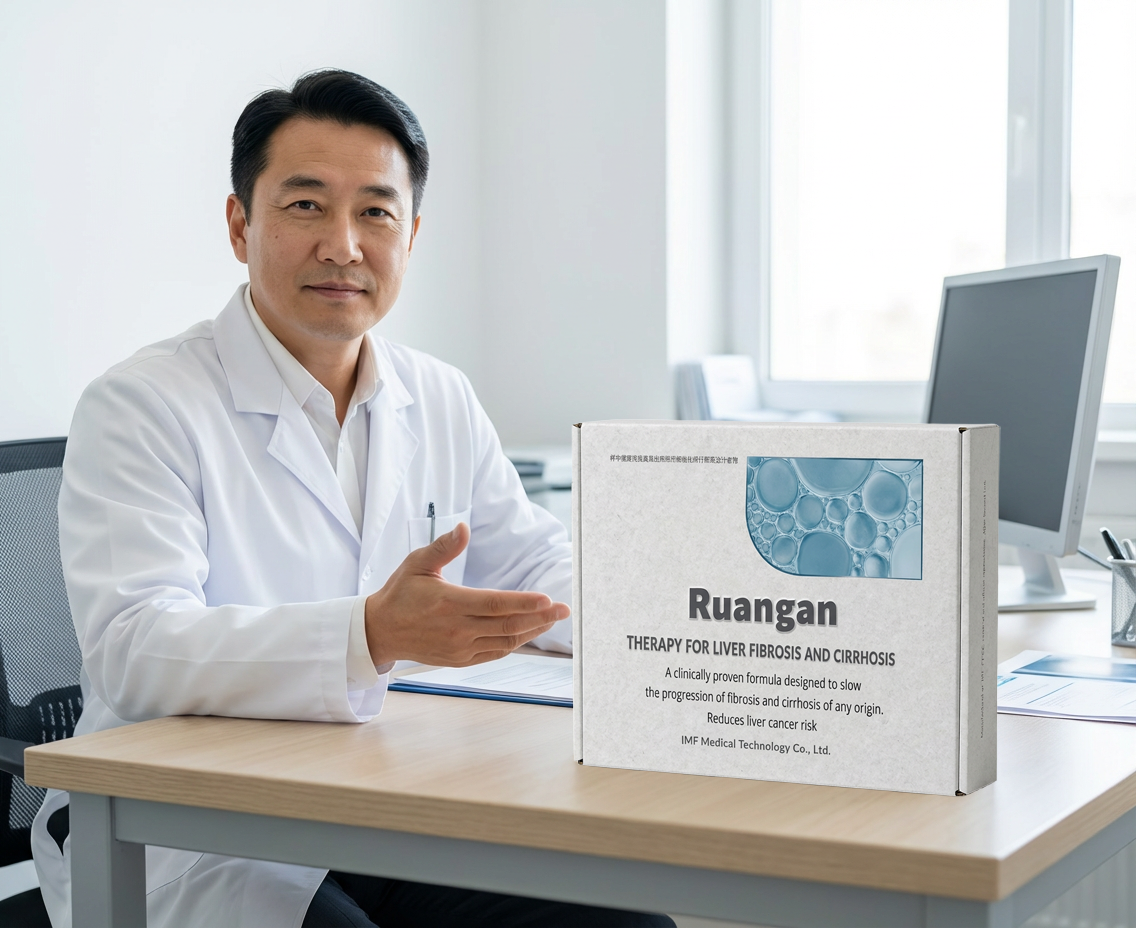
The drug Fufang Bijia Ruangan (Ruangan) it has become the object of close attention of the scientific community precisely because of its unique multi-target mechanism. Unlike synthetic monopreparations that act on a single point of application, Ruangan implements a ‘carpet bombing’ strategy for key links in the pathogenesis of fibrosis. Based on research published in Frontiers in Pharmacology and the Journal of Ethnopharmacology, we will take a closer look at exactly how this drug works at the cellular and molecular levels.
1. Targeting the’ architects ‘ of fibrosis – liver stellate cells (HSCs)
The central figure in the development of fibrosis is the stellate cells of the liver (HSC — Hepatic Stellate Cells). In a healthy organ, they are at rest and are engaged in depositing vitamin A. However, when the liver is damaged (by viruses, alcohol, fats), HSCs are activated and transformed into myofibroblasts. It is these transformed cells that begin to furiously produce collagen, creating scar tissue.
Ruangan Action:
In vitro and in vivo studies have shown that the drug directly interferes with the HSC life cycle:
- Inhibition of proliferation: The components of the drug (in particular, extracts of turtle shell and peony root) block the division of activated stellate cells, stopping the growth of the population of ‘builders’ of scars.
- Induction of apoptosis: The drug triggers the mechanism of programmed cell death of senescent and hyperactive myofibroblasts, clearing the liver of abnormal cells, but not affecting healthy hepatocytes.
- Reversion of the phenotype: The unique property of the drug is the ability to return some of the activated cells back to the Quiescent state, restoring their normal function.
2. Blockade of the main signaling pathway of fibrogenesis (TGF-β1 / Smad)
If stellate cells are the ‘workers’ who build the scar wall, then the signal protein TGF-β1 (transforming growth factor beta-1) is the ‘foreman’ who gives orders. This is the most powerful profibrogenic cytokine known to science. By binding to receptors on the cell surface, it transmits a signal to the interior via Smad family proteins, which penetrate the cell nucleus and trigger genes responsible for the synthesis of fibrous tissue.
Molecular ‘silencer’:
Scientific work confirms that Ruangan acts as a powerful inhibitor of this axis:
- Reduced TGF-β1 expression: The drug reduces the production of growth factor itself by Kupffer cells (liver macrophages).
- Blockade of phosphorylation of Smad proteins: Ruangan inhibits the activation of Smad2 and Smad3 proteins. Inactive proteins cannot enter the cell nucleus, and the command to synthesize collagen simply does not reach the ‘control center’ of the cell.
- Smad7 Activation: At the same time, the drug stimulates the production of Smad7 protein, which is a natural internal inhibitor of fibrogenesis, suppressing excessive tissue response.
3. Matrix Remodeling: MMPs and TIMPs balance
The liver is constantly undergoing a process of updating the framework (extracellular matrix). Matrix metalloproteinases (MMPs)are responsible for the destruction of old collagen. Their antagonists are tissue metalloproteinase inhibitors (TIMPs) – prohibit the destruction of tissue. With fibrosis, the TIMPs level goes through the roof, and collagen accumulates like garbage that no one can take out.
Restoring balance:
Ruangan restores the disturbed balance by acting in two ways:
- MMP-2 and MMP-9 stimulation: The drug increases the activity of disrupting enzymes, which begin to actively ‘saw’ dense collagen fibers of type IV, which form the basis of fibrous septa.
- TIMP-1 Suppression: By reducing the level of inhibitors, the drug removes the ‘lock’ from the process of matrix degradation.
It is this mechanism that underlies the clinically observed phenomenon of fibrosis regression — a physical reduction in the volume of scar tissue.
4. Anti-inflammatory strategy and protection against oxidative stress
Fibrosis never occurs out of nowhere — it is always a consequence of chronic inflammation. Constant free radical attack (oxidative stress) damages the membranes of hepatocytes, causing the release of inflammatory cytokines.
Comprehensive protection:
The composition of the drug (especially Cordyceps and Radix Paeoni) provides a powerful antioxidant effect:
- Reduced cytokine storm: The levels of proinflammatory markers TNF-α (tumor necrosis factor), IL-6 and IL-1β significantly decreased. Reducing inflammation automatically reduces the stimulation of fibrogenesis.
- Mitochondrial protection: The components of the drug stabilize the mitochondrial membranes of liver cells, preventing their death from lipid peroxidation (LPO) and increasing the level of the protective enzyme superoxide dismutase (SOD).
5. Improvement of microcirculation and hemodynamics
Liver fibrosis inevitably leads to increased vascular resistance and the development of portal hypertension. Dense tissue compresses the sinusoids (capillaries of the liver), impairing the nutrition of the organ.
Ruangan implements the principle of TCM ‘elimination of blood stagnation’ (Huo Xue Hua Yu) at the level of physiology:
- The drug contributes to the normalization of sinusoidal blood flow.
- Reduces intrahepatic vascular resistance.
- Reduces pressure in the portal vein, which is critical for preventing bleeding from esophageal varicose veins in patients with advanced stages of the disease.
Synergy of components: Why does the formula work?
The secret to the effectiveness of Fufang Bijia Ruangan lies in the synergy of its 11 components, each of which performs its role in the mechanisms described above:
- Turtle shell (Carapax Trionycis): A source of bioactive peptides and trace elements, the main agent that inhibits HSC proliferation and softens tissue.
- Cordyceps sinensis: A powerful immunomodulator that prevents immune damage to the liver and fibrosis.
- Sage root (Salvia miltiorrhiza) and Red Peony: They improve microcirculation and block oxidative stress.
Conclusion
Fufang Bijia Ruangan is not just a collection of herbs, but a complex pharmacological system with proven multimodal action. It attacks the disease from different angles: it blocks the signal for scar construction (the TGF-β/Smad pathway), destroys builders (HSC), and helps to ‘take out garbage’ (MMPs activation).
This makes it a pathogenetic therapy drug that can actually change the natural course of liver fibrosis, turning it from an irreversible state into a curable disease.yecheni and prevention of serious complications of cirrhosis.
Sources:
Frontiers in Pharmacology (2022)
Journal of Infectious Diseases (2022)
Journal of Ethnopharmacology (2023)