
When patients are diagnosed with fibrosis or cirrhosis, the prescriptions almost always contain familiar names: Heptral, Ursosan (or Ursofalk), Phosphogliv (or Essentiale).
These medications are really popular and doctors prescribe them for a reason. They help the liver function. But it often happens like this: a person conscientiously drinks pills for six months or a year, spends a lot of money, and a Fibroscan test shows that the liver has not become softer. The degree of fibrosis remained the same or even increased (for example, from stage 2 to stage 3).
Why is this happening? Don’t the drugs really work?
They work. But they do not do at all what is needed for resorption of scars. They are ‘protectors’, not ‘builders’.
‘Protection’ vs ‘Recovery’: what is the difference?
To understand why conventional treatment often does not remove fibrosis, you can imagine the liver as a house in which there was a fire.
- Hepatoprotectors (Heptral, Ursosan, etc.) ‘this is the rescue team. They pour water on the walls, strengthen the windows, and take out the garbage. Their task is to save those rooms (liver cells) that are still intact, so that they do not burn down.
- Fibrosis is a concrete partition that the body hastily seals up burnt areas. The more such concrete walls (scars), the more cramped the house is, and the worse it functions.
The main problem with popular drugs is that they do not have the tools to destroy this ‘concrete’. They perfectly save living cells, but are absolutely powerless before the already formed hard scars. They work BEFORE the scar is formed, but they can’t remove it AFTER.
Comparison in simple words: who is responsible for what?
If you look at the instructions for the drugs, it becomes clear: they simply do not have the task of removing scar tissue.
| Medication | What is it really used for? | Does it affect scarring (fibrosis)? |
|---|---|---|
| Heptral (Heptor) | Improves mood, gives energy, helps the liver to neutralize toxins. | Almost none. It helps cells survive, but it can’t dissolve the dense scar tissue. |
| Ursosan (Ursofalk) | Dilutes bile. It is necessary that bile does not stagnate and does not corrode the liver from the inside. | Weakly. It only helps if the fibrosis is caused by stagnation of bile. With viral hepatitis, scarring is almost not affected. |
| Phosphogliv / Essentiale | ‘Patches holes’ in the membranes of liver cells. | No. It’s just a building material for cell walls, but it doesn’t remove scarring. |
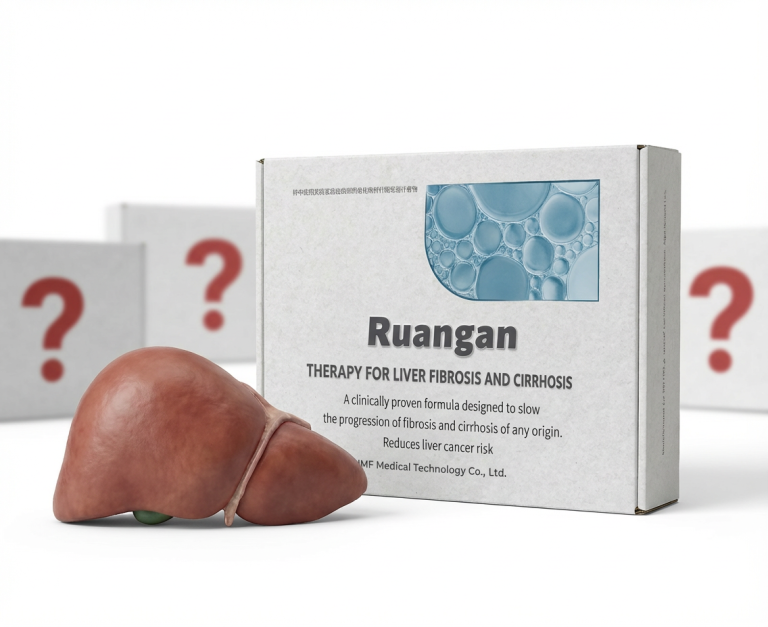
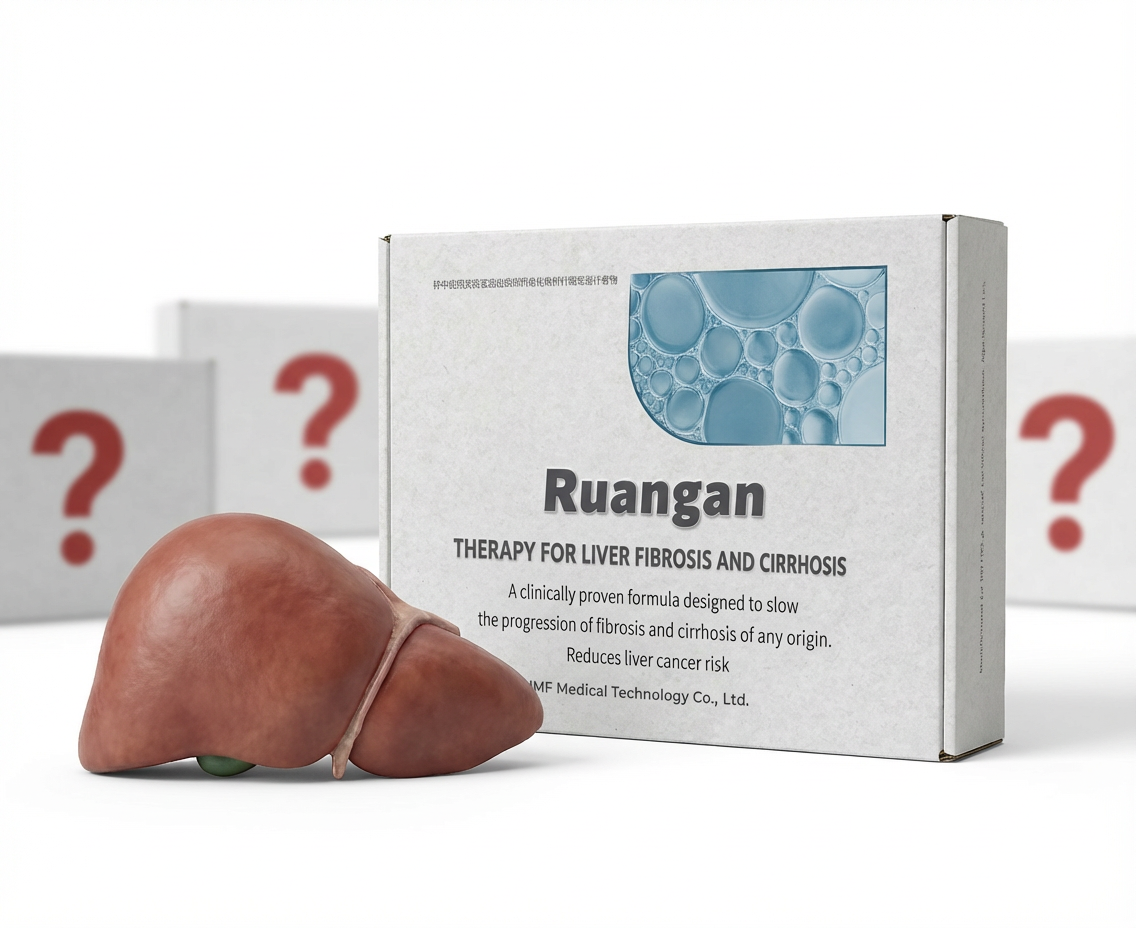
| Ruangan | Special composition for softening the fabric. | Yes. Its main goal is to stop the production of ‘concrete’ and start the process of resorption of old scars. |
Why don’t regular pills dissolve scars?
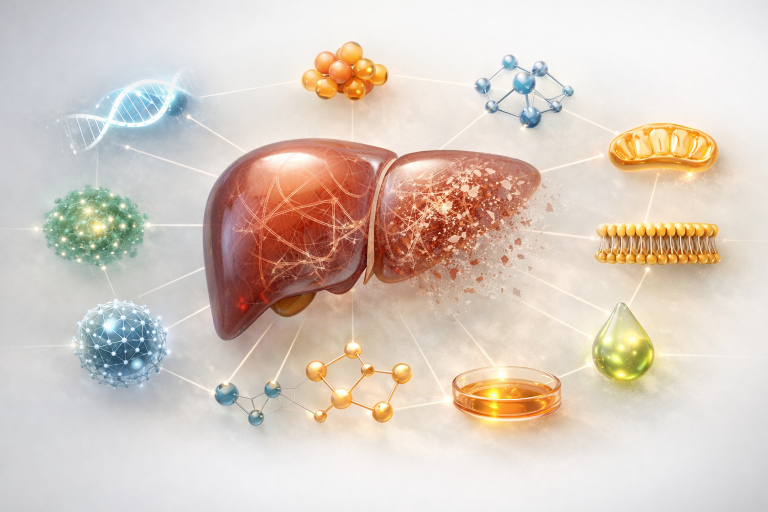
The liver scar is made up of collagen — a very strong protein similar to ropes. To remove this scar, the body needs to do two difficult things:
- Euthanize ‘builders’: There are special cells in the liver (stellate cells) that go crazy with the disease and start building these scars non-stop.
- Wake up the ‘cleaners’: Activate special enzymes that work like scissors and cut through old scars.
Heptral and Essentiale do not know how to command these cells. They can’t tell the ‘construction workers’ to stop and the ‘cleaners’ to start working. As a result, while taking these medications, the tests may become better (ALT and AST return to normal), the state of health improves, but the liver itself remains hard and scarred.
Ruangan: effects on fibrous tissue
Fufang Bijia Ruangan Pian was created specifically to solve a problem that conventional hepatoprotectors cannot cope with.
How it works (in simple words):
- Stops the construction site: It blocks signals that cause the body to grow new scars.
- Starts cleaning: It activates the same enzymes – ‘scissors’, which begin to gradually break down dense tissue. The liver becomes softer.
- Result: This is one of the few drugs that has been shown in serious studies to reduce the stage of fibrosis (for example, to return the liver from pre-cirrhosis to a healthier state).
What to do with liver fibrosis?
This article does not say that Heptral or Ursosan are bad drugs. No, they are very important. They relieve inflammation and save living cells. But if the goal is not just to support the liver, but to reduce fibrosis, support alone is not enough.
Often the best solution is a reasonable combination: the use of proven hepatoprotectors to protect cells and specialized agents, such as Ruangan, to restore the structure of the organ.
When choosing such therapy, it is important to be confident in the quality of the products used, since the effectiveness directly depends on the authenticity of the composition and compliance with storage conditions. If you have any questions about how to distinguish the original drug, where to find it, or how to correctly fit it into your current treatment regimen — you can contact us for information support. We will help you understand the nuances.