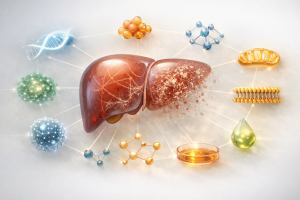

Liver fibrosis is a ‘silent epidemic’ of modern hepatology. For a long time, doctors worked in a paradigm where the main goal was only to eliminate the cause of the disease (for example, suppression of the hepatitis virus or abstinence from alcohol), while scar tissue was considered almost invariable. Patients diagnosed with cirrhosis or severe fibrosis (F3-F4) are often told that their condition is irreversible.
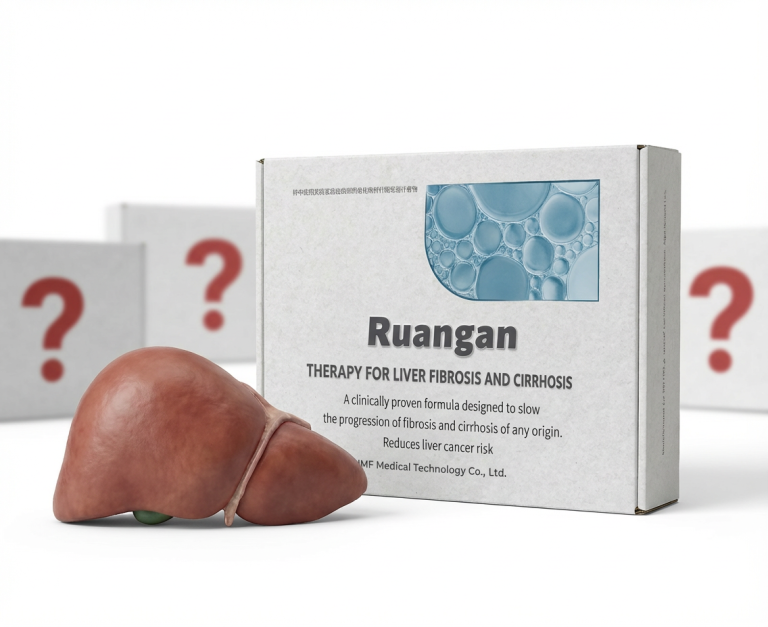
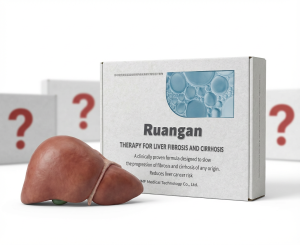
The introduction of the drug Fufang Bijia Ruangan has changed this picture. This is the first drug in the world that has received state registration (NMPA) with a direct indication: treatment of liver fibrosis. He proved that scar tissue can be remodeled, and the liver can regenerate even at the stage of early cirrhosis.
Unique status: not just a dietary supplement
It is important to understand the fundamental difference between Ruangan and many ‘hepatoprotectors’ on the market. This is not a dietary supplement, but a full-fledged pharmaceutical product that has passed all phases of clinical trials.
Its formula is a complex complex of 11 components. The’ core ‘ of the composition is the shell of the Chinese soft-bodied turtle (Trionyx sinensis), which in combination with cordyceps, red peony root and rhodiola rosea creates a powerful antifibrotic effect. Chinese medicine describes this action as ‘softening hard nodes and dispelling stagnation’, and modern pharmacology deciphers it as a directed effect on the liver cell matrix.
Mechanism of action: how to stop the’ builders ‘ of scars?
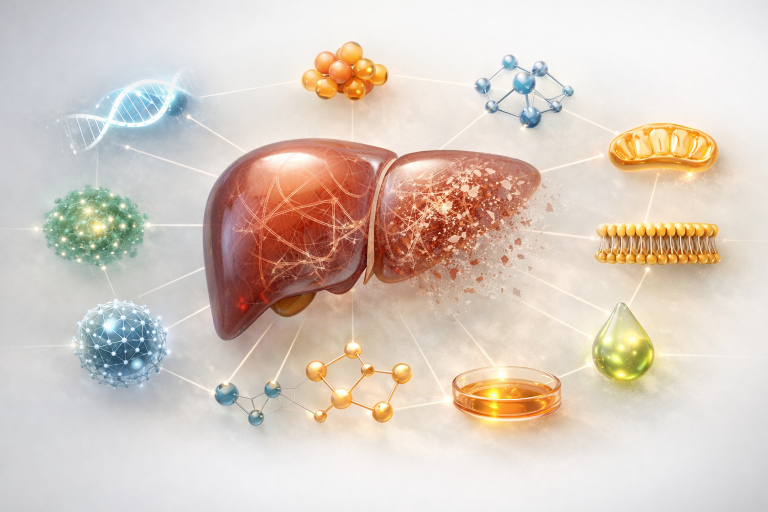
Fibrosis occurs when special liver cells (stellate cells, or HSCs) are activated and begin to produce uncontrolled collagen, replacing healthy cells with it. Ruangan operates on a multi-target basis, blocking this process on three levels:
- HSC Activation Suppression: The drug ‘calms’ stellate cells, preventing their transformation into myofibroblasts — the main culprits of scarring.
- Blocking of signal paths: The active ingredients of the drug inhibit the TGF-β1/Smad. pathway, which is the main communication channel through which the command to build fibrous tissue is transmitted. By interrupting this signal, the drug stops the production of excess collagen.
- Degradation of old scars: Ruangan stimulates the production of matrix metalloproteinases — MMP) – enzymes that can break down already formed collagen fibers, literally ‘resorbing’ fibrosis.
Evidence base: results that change protocols
The effectiveness of the drug is confirmed by the’ gold standard ‘ of evidence — based medicine-randomized placebo-controlled studies. One of the key studies published in the authoritative Journal of Infectious Diseases (USA) showed impressive results.
Study NCT01965418 (72 weeks of therapy):
In the group of patients with chronic hepatitis B treated with the Entecavir + Ruangan combination, the following results were recorded in comparison with entecavir monotherapy:
- Regression of fibrosis: Significantly more often there was a decrease in the stage of fibrosis on the METAVIR scale.
- Cirrhosis reversal: In 41.5% of patients with initial early cirrhosis, the diagnosis was removed histologically (based on the results of repeated biopsy). For comparison, on standard therapy, this figure was about 30%.
- Reduction of hypoxia: Improvement of microcirculation in the liver tissue contributed to the restoration of functional activity of hepatocytes.
Biochemical control: what will the patient see in the tests?
The effect of the drug is objectively monitored not only by biopsy or elastography (Fibroscan), but also by blood tests. Systematic reviews confirm that the course of therapy significantly reduces four key markers of fibrosis:
- Hyaluronic Acid (HA): Marker of active inflammation and fibrogenesis.
- Laminin (LN): Protein, the level of which increases during the formation of septa in the liver.
- Collagen Type IV (IV-C) and Procollagen III (PCIII): Direct indicators of connective tissue overgrowth.
A decrease in these parameters correlates with a decrease in liver density (cPa) and a reduced risk of developing portal hypertension.
Practical guide: who and how to apply it?
The drug shows the best results in combination therapy. . It does not replace antiviral drugs (if the cause is a virus), but complements them, solving the task that they do not cope with — working with the structure of the tissue.
Profile of the ideal candidate:
- Patients with chronic hepatitis B or C (including after treatment of hepatitis C virus, if fibrosis persists).
- Patients with diagnosed fibrosis stages F2-F4.
- Patients with NAFLD (fatty hepatosis) with signs of fibrosis who require support for liver metabolic health.
Course Features:
- Duration: Tissue remodeling is a slow process. The minimum recommended course is 6 months, the optimal one is 12 months or more under the supervision of a doctor.
- Security: The drug is characterized by a high safety profile comparable to placebo, which allows it to be prescribed for a long time without the risk of toxic load on the body.
Conclusion
Fufang Biejia Ruangan moves fibrosis from the category of ‘irreversible changes’ to the category of manageable conditions. For the doctor, this is a powerful adjuvant therapy tool, and for the patient — it is a reasonable hope for restoring the normal architecture of the liver and preventing the dangerous complications of cirrhosis.
Источники:
Efficacy of Fufang Biejia Ruangan Pill on Fibrosis
Journal of Infectious Diseases (2022)
Frontiers in Pharmacology (2022)